


Past
Teachings
Jesus rarely responded to questions with straightforward answers. Instead, he told stories—stories about farmers and feasts, lost coins and generous employers, unexpected neighbors and extravagant grace. In this series, we'll explore some of Jesus' most memorable parables and discover how these ancient stories continue to challenge, comfort, and transform us today. Together, we'll learn what the Kingdom of God is like and what it means to follow Jesus in the ordinary moments of everyday life
From creation to chaos, the early chapters of Genesis reveal a God who consistently resists domination, limits violence, and works toward healing through relationship, not force. In these opening pages, we are given a vision of God’s intention for the world — a life of image-bearing, shalom, and mutuality, where humanity lives in right relationship with God, one another, and all creation. Even when humanity fractures the world, God responds not with annihilation, but with covenant and grace — a story that reaches its climax in Jesus, where what began at a tree is healed on the cross, and in the resurrection, we taste the first fruits of the renewal of all creation.

Christians often inherit words before they inherit meaning. Over time, essential gospel language becomes distorted, weaponized, moralized, or flattened. In our Lenten series, we're taking time to to slow down, return to Scripture, and recover the life-giving, Jesus-centered meaning of the words we use to describe God, ourselves, and the work of salvation.

Assembly Required explores what it means to be the Church—not a building or an event, but an assembly of people called together around Jesus. Drawing on the biblical vision of ekklesia, this series invites us to rediscover why the local church matters, why participation is essential, and how faith is formed through shared life and practice. Our 2026 prayer series, Assembly Required, invites us to become a Jesus-centered people who actively join God’s work of renewal in our community and beyond.

We were made for connection, but forming a meaningful community is harder than we expected. We long for belonging but often feel like outsiders. In this series, we’ll explore the tensions of loneliness and the good news of a Jesus-centered community. Together, we’ll learn the everyday practices that help strangers become friends and form a household of faith marked by peace, forgiveness, and trust.

If you’ve been to Missio for a bit, you’ve probably sung a worship song with the lyric about the “reckless love of God.” That turn of phrase – “reckless love” –– represents a common way of describing God’s love and beautifully captures the way God pursues us and loves us at cost to himself. But, it also poses a question: can God be “reckless?” The word “reckless” implies a risk, maybe even uncertainty but Christians believe God knows everything so can anything God does be “reckless”? So how should we understand the love of God? How does God work in the world? And what does it mean for us?
In our June sermon series (including Pentecost and Trinity Sunday) we are exploring how the God who knows all and can do all, chooses to work in partnership and mutuality––coming alongside us in truly relational ways. Throughout June we will explore the work of the Spirit on Pentecost Sunday, we’ll look at the very nature of God on Trinity Sunday, the power of God in Christ, and the love of God in the cross.

For the last few years, we’ve intentionally started the new year with a series on practices. We do this to ground ourselves in the rhythms of the Jesus way as an antidote to the busyness of this time of year. This year, we’re focusing on how God makes Every Moment Holy, even and maybe especially the regular ones. Seeing God at work in every moment is an invitation to live attentively, in the rhythm and way of God.

Eastertide is the season we celebrate the resurrection of Jesus. The resurrection isn’t just a one time event to commemorate, it is instead a world altering reality that invites us into a whole new way of living. We see this on full display for the earliest followers of Jesus who found their lives and world upturned by their surprising king who defeated death, sin, and the powers of evil not through violence but love. Jesus’ self-sacrificial, other oriented love was vindicated in the resurrection and served as the way of life for early followers.

The book of Jonah is a strange tale that you probably remember from Sunday School. It’s got a big whale, a rebellious prophet, a tree eating worm, and a repentant Nineveh. These features make Jonah perfect for the screen but a bit hard to understand as scripture. Should we read Jonah like any other prophet or is it a parable? That strange ambiguity takes some work to understand but it’s also what makes the book of Jonah so powerful. At the heart of the story of Jonah is a reluctant prophet frustrated by the mercy of God. As we read this strange little story, we’re invited to look at our own lives and ask ourselves, do we really want God to love our enemies? Do we really want God to be merciful?

In the book of Colossians, the Apostle Paul gives us a cosmic vision of Christ—Creator, Sustainer, and Reconciler of everything. Colossians is filled with big ideas and wondrous descriptions. But Paul’s theology isn’t just big ideas or idle theories, it's also deeply practical, both cosmic and grounded––expanding our imaginations and at the same time offering practical direction for our daily life. How can it be both? Because for Paul, Christ is at the center of it all holding the universe and everything within it, even our daily lives, together.
Throughout the season of Lent, we will be exploring Paul’s letter to the Philippians. This short letter, written while Paul was in prison, is a beautiful invitation to participate in the story, life, and people of Jesus. The story of Jesus is transformative and as we encounter Him, we cannot help become a people who love more like Him.

In the early church, apostles and leaders wrote to communities to help them make good choices. On the one hand, their words can feel overbearing and restrictive, but on the other hand, they can feel a lot like love. Love that cares about where you get your information. Love cares about conflict and how you treat people you disagree you. Love that concerns itself with respect other peoples choices. Love that inquires about about your body. Again and again, when we turn to letters like 1 Corinthians, we walk away with wisdom that speaks across centuries to help us make good choices.

Extending Our Table – 2025 Vision Series. Together, we’ll explore what 2025 holds for Missio—our hopes, dreams, and prayers for the future of this community. Don’t miss this time to reflect on where God is leading us and how we can continue creating space for others at the table.

This Lent, we’re exploring key moments in the life of Jesus that reveal who he is, what he’s up to, and how he works. We’re calling this series Portraits of a King because each moment is a snapshot worth a thousand words. Through these images, we see the kind of King we serve—a King who gives up power, who serves, and who lays down his life for his enemies. This is a King unlike any other.
There are certain characters in the Bible with bigger than life stories. People like Moses who led the Israelites out of Egypt, or David who became king, or Elijah who was a wild and honestly very strange prophet. These stories are captivating and inspiring, but they are also marked by seasons of mundanity, isolation, & wilderness and it’s in these regular moments that God meets us, shapes us, and prepares us for the road ahead.

What does it mean that God has a body? Advent is the season when we celebrate and remember God entering the world, moving into the neighborhood to be with us. One of the most profound aspects of this is that God “took on flesh” and became embodied. In this Advent series, we will explore the significance of God's embodiment—what it reveals about God, what it means for us as a community, and how it shapes our future hope.

Missio Dei means the mission of God. That phrase is our name (obviously right…) but it also represents our deep conviction that God is, actively, on mission in our city already. God is present in our place, moving ahead of and before us. Our job as Christians and a local church is to join God’s work, to be present to God’s presence so that we can participate in what the Spirit is already doing. The question is, how do we discern the movement of God and join in on what God is doing?

What does peace have to do with the gospel? Peace is central to the mission and work of Jesus. He really is The Prince of Peace and we really believe swords will be turned into plow shares, lions will lie down with lambs, and that our God died for enemies. So what is peace? What does it mean for us? And how do we become “peacemakers?”

In our series Heart, we will be exploring 5 spiritual practices that help us curate hearts of God-shaped love. These are practices that begin internally, creating space to listen and pay attention to ourselves and God (silence and solitude), practices that help us rid ourselves of idols/unhealthy coping mechanisms (simplicity), and practices that move us toward humble participation in community (communal discernment). These practices are ancient and have been helping Christians for 2,000 years practice humility and open themselves up to receiving and extending love.
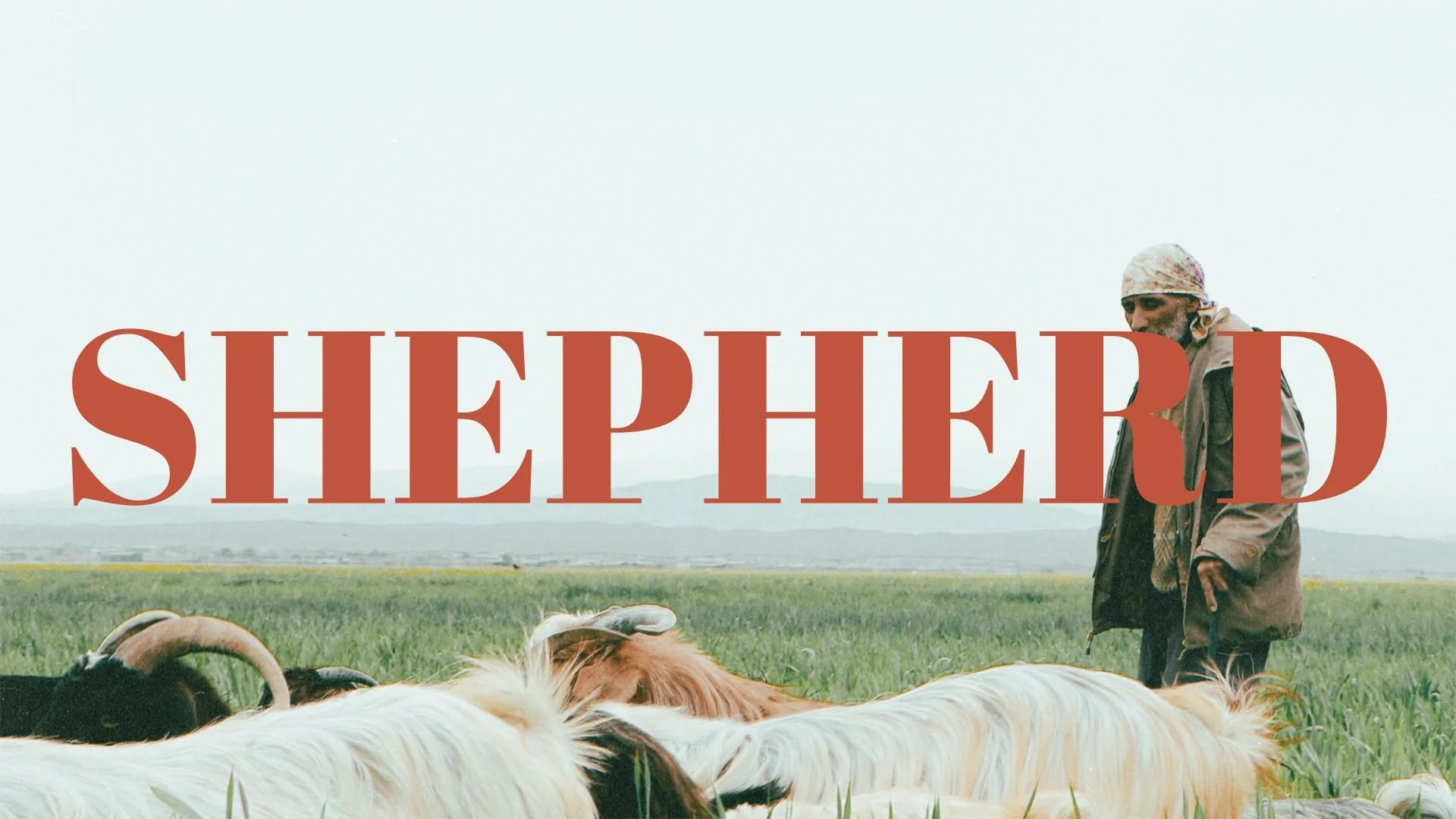
Advent is a season of presence in which we celebrate and remember the way in which God entered the world to be present with us. Our Good Shepherd came to earth to lead us towards green pastures. He entered into hostility and laid a table before us. Our God moved into the neighborhood to pursue us in love and faithfulness.

The Bible is a wonderful, beautiful, and (if we're being honest) confusing book. It contains some of the greatest stories, moral advice, and life giving wisdom while at the very same time it can be complicated, startling, and hard to understand. What do we do with this wonderfully strange book? How do we read it? How do we engage with it in ways that lead us into a deeper relationship with Jesus?

Parties are central to the work and life of Jesus. His very first miracle was turning water into wine so that a wedding party could get lit and on his travels, Jesus would party with pharisees, outcasts, tax collectors and anyone else who invited him. In fact, Jesus partied so much he was accused of being “a glutton and a drunk” (Luke 7:34).

Is the gospel good news for us today? For many, it seems like our faith has little to offer the world around us. Our gospel has become too small--it looks nothing like the Jesus who embodies good news in the flesh. The good news about is good news is that it looks and sounds like Jesus.

After the resurrection, Jesus appeared to his disciples and friends in order to help them understand why the resurrection was such good news. Each of these appearances are different, graciously and intimately personal. And yet, at the same time, they share a common thread as Jesus invites each person to experience new–resurrection–life in him.

The book of Ruth is often read like a love story but Ruth is no rom-com. Instead it’s a story of real suffering and genuine courage as characters experience famine, death, and poverty. In this short Old Testament book we read the story of real people who are trying to trust God in their everyday. It isn’t easy. It isn’t pretty. It isn’t a rom-com with a meet-cute, but a story of hard fought faithfulness and hope.

In our series, I am not, we will be looking at common identity stories. Then we will counter those false, small, or reduced stories with the good news of God’s story. We are not our hustle, our production, or our image. We are not how responsible we are nor are we our mistakes. We are image bearers, created in goodness and named loved. Nothing, not anything, can change that.
Advent is a season intended to root us in the biblical story of Jesus. A story marked by anticipating, expectation and waiting. This series explores four key words of Advent: Hope, Peace, Joy, and Love. These words help us name the startling, surprising, wonderful dream that is Advent.